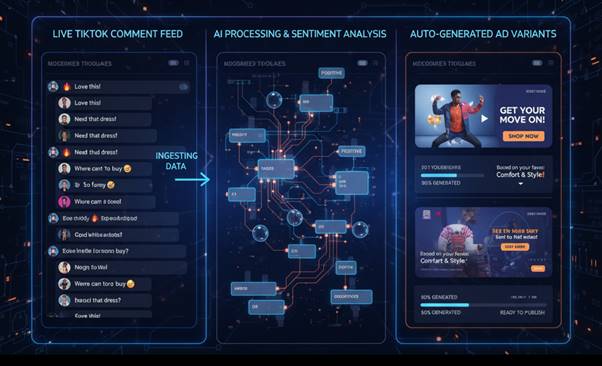
Generative AI has grown faster than any tech in business history, and one of the most useful battlegrounds of late is autonomous inventory management. These are not basic forecasting spreadsheets anymore. Generative systems of today process a lot of data. This includes weather, social media, events in the area and sales history, among other things. It then creates simulations for hundreds of futures. Consequently, they write explanations in plain English and, with almost no human action, they reorder stock from the warehouse and online channels. We cannot ignore the parallel with the art world. Specifically, when Christie’s sold an AI-generated portrait for $432,500 in 2023, there was immediate and strong backlash (ARTnews, 2023). Just like AI, the inventory will also have the same collision, which violates the fundamental principles. A small-scale retailer is already living that future, and this post spells out exactly what ethical deployment demands.
Shopify and Square have become the most accessible gateways for independent businesses. Shopify’s 2025 generative demand-forecasting engine now creates dynamic “what-if” simulations every hour and can auto-draft and send purchase orders to suppliers (Shopify, 2025). Sustainable footwear brand Allbirds slashed overstock by 25–30% across its winter 2024–2025 range because the system predicted demand shifts weeks ahead and executed replenishment without anyone opening Excel. Square took a different angle: its mid-2025 conversational AI upgrade lets a café owner simply ask “What should I stock for the weekend street festival?” and receive a fully-costed, ready-to-execute inventory plan (Block, Inc., 2025). One Chicago coffee chain using the feature cut food waste by 18% and lifted weekend margins by 11% in a single quarter.
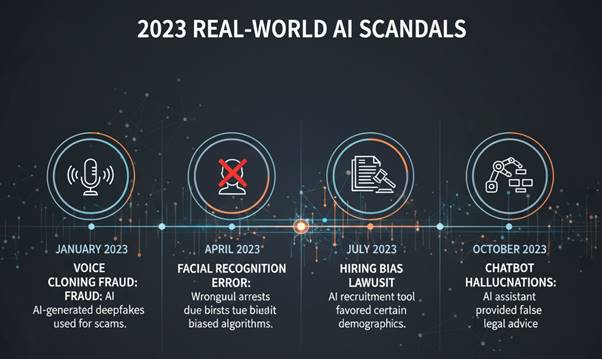
Adapted from: ARTnews (2023).
Scale the same ideas up, and the numbers become jaw-dropping. Walmart’s generative-AI “self-healing” supply chain, rolled out across every US store in early 2025, detects imbalances in real time and generates rerouting instructions that execute automatically, cutting stock-outs by 30% and saving hundreds of millions in excess inventory (AIMultiple Research, 2025). Toyota used similar scenario-generation tools during the lingering 2024–2025 chip shortage to simulate thousands of supplier swaps and protect production lines (SuperAGI, 2025). Deloitte now forecasts that by the end of 2025, one in four Fortune 500 companies will have at least one autonomous generative agent making live inventory decisions (Deloitte, 2025). The trajectory is crystal clear.
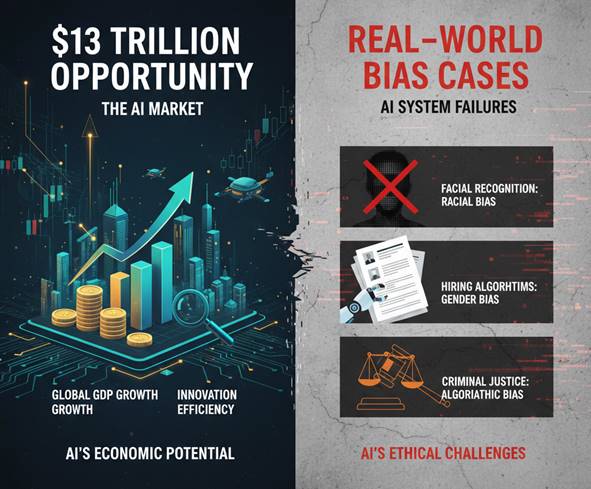
The ethical warning lights, however, are flashing red. Models trained mostly on urban, high-volume data routinely under-forecast demand in rural or minority-community stores, effectively punishing smaller and diverse retailers. Hallucinations – where the AI confidently fabricates trends that never existed – have already caused millions in spoiled stock across Europe. IBM warns that without rigorous grounding mechanisms, these errors will only grow as systems become more autonomous (IBM, 2025). Over-automation threatens warehouse and buying jobs unless deliberate reskilling programmes are built in from day one. ResearchGate’s latest ethical review insists on mandatory quarterly bias audits, full explainability logs, and human approval gates for high-value decisions (ResearchGate, 2025).
By 2030, generative AI could automate almost half of all inventory tasks and unlock trillions in value worldwide (McKinsey & Company, 2025). For the independent retailer, that future is exhilarating – stock that practically manages itself, cash tied up for weeks instead of months, and the real chance to punch above Amazon’s weight on speed and service. But the Christie’s lesson is brutal: rush ahead without rock-solid ethical guardrails, and the backlash can kill adoption overnight (ARTnews, 2023). The retailers who will win long-term are the ones treating transparency, fairness, and human oversight as genuine competitive advantages rather than compliance headaches. Get the ethics right first, and the efficiency revolution will follow sustainably.
References
AIMultiple Research. (2025). 10 generative AI supply chain use cases. https://research.aimultiple.com/generative-ai-supply-chain/
ARTnews. (2023). Christie’s AI art sale ‘augmented intelligence’ controversy surpasses expectations. https://www.artnews.com/art-news/market/christies-ai-art-sale-augmented-intelligence-controversy-surpasses-expectations-1234734870/
Block, Inc. (2025). Square AI gains new intelligence capabilities. https://investors.block.xyz/investor-news/news-details/2025/Square-AI-Gains-New-Intelligence-Capabilities-Providing-Deeper-Business-and-Neighborhood-Insights-to-Square-Sellers/default.aspx
Deloitte. (2025). Autonomous generative AI agents. https://www.deloitte.com/us/en/insights/industry/technology/technology-media-and-telecom-predictions/2025/autonomous-generative-ai-agents-still-under-development.html
IBM. (2025). How generative AI will revolutionise the supply chain. https://www.ibm.com/think/topics/generative-ai-supply-chain-future
McKinsey & Company. (2025). The state of AI in 2025. https://www.mckinsey.com/capabilities/quantumblack/our-insights/the-state-of-ai
ResearchGate. (2025). Ethical considerations and challenges of AI in supply chain management. https://www.researchgate.net/publication/389255282_Ethical_Considerations_and_Challenges_of_AI_in_Supply_Chain_Management_Definition_of_AI_in_Supply_Chain_Management_SCM
Shopify. (2025). What is AI demand forecasting? https://www.shopify.com/blog/ai-demand-forecasting
SuperAGI. (2025). Real-world success stories: Optimising inventory with AI. https://superagi.com/real-world-success-stories-how-top-companies-are-optimizing-inventory-with-ai-in-2025/
 Site Title