After reading Huang and Rust’s paper in the International Journal of Research in Marketing, I closed the PDF feeling inspired and uneasy. You will realise instantly that generative AI represents not an incremental improvement but the most significant disruption marketing has experienced since the internet. The writers add to their prior four-stage service intelligence framework, which entails mechanical, analytical, intuitive and empathetic by illustrating how real marketing tasks are already happening across the full spectrum by tools such as ChatGPT, DALL-E and Midjourney. They say that generative AI will totally change the use of customer experience, content creation, and pricing strategy, including auto-generating product descriptions, co-creating visuals with customers and empathetic conversations. This paper is ambitiously structured and is already one of the most cited papers on the topic.
This framework would definitely be useful for anyone involved with information systems in business. Mechanical generative AIs do repetitive standardisation (like thousands of SEO-optimised product listings in just seconds). Analytical generative AIs personalise at scale using customer data. Intuitive generative AIs come up with original images, videos, and copy. Empathetic generative AIs simulate human-like emotional responses in chatbots. Huang and Rust give us details and examples throughout: Coca-Cola using GPT-4 to brainstorm a new campaign, Nike letting customers design their own trainers with DALL-E and beauty brands running AI-powered virtual try-on experiences. This taxonomy finally gives practitioners a roadmap by which they can move beyond pilot projects and embed generative AI in core marketing information systems instead of using it as a side toy.
The paper’s overly enthusiastic nature makes me wary. On page 482, the writers state that generative AI will “transform marketing in ways that are hard to overestimate”. However, the risks section gets squeezed to just a little over half of the page towards the end. They accept there are ethical issues as well as job losses, copyright infringement, misinformation and hallucination risks. Then there is a quick pivot to “further research should look at mitigation strategies.” As someone who studies information systems, I expected a more in-depth engagement with actual failures – Amazon’s biased hiring AI, Google’s Gemini image generation ‘fakes’ or the many brands who got burned by dangerous advice from AI chatbots. The EU AI Act had already been drafted, and OpenAI had published system-card warnings on GPT-4 hallucinations about its treatment of risk in 2023. Not acknowledging these cases makes the opportunities feel somewhat disconnected from the frontline reality.
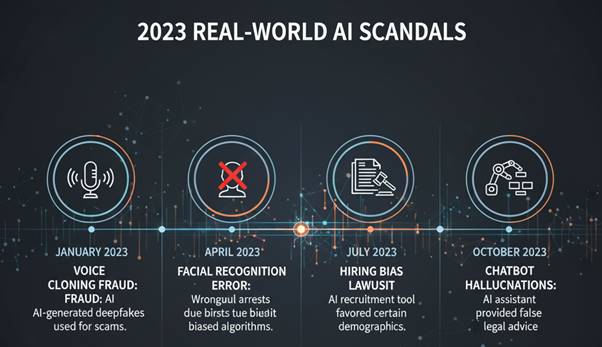
Adapted from: AIMultiple (2025)
It was both a strong point and a weak point in the sense that it is more conceptual than empirical. This report contains no original datasets, no manager interviews, and no field experiments — just a clever synthesis and some logical extensions. That method works incredibly and proves effective for carrying out their planned tasks, but many of their pledged claims are only hypothetical. As Huang and Rust illustrate, generative AI will soon negotiate prices or manage long-term relationships with the “empathetic memory” of a long-running dialogue. The current generation of models struggles with context longer than a few thousand tokens and regularly makes up facts. For the most part, it can be inferred from the paper that the jump between nifty demos and enterprise-scale marketing information systems is much more significant than it would seem the case.
Huang and Rust have given us just the fabulous piece that we need to include in every digital marketing syllabus. The framework with the four types of intelligence is really useful, the case studies are inspiring, and the research agenda should keep PhD students busy for years. As a critical reader, I find this paper underplays the governance, skills and infrastructure challenges businesses actually do face today. Generative AI is impactful — there’s no doubt about that. Still, to deploy it successfully will require much more than technical capability. Specifically, it requires ethical guardrails, data quality, and human oversight, which this paper largely assumes. One must read it for the vision, cite it for the framework, but add in some words of caution from the real world.
References
AIMultiple. (2025). Handle Top 12 AI Ethics Dilemmas with Real Life Examples. AIMultiple. https://research.aimultiple.com/ai-ethics/
Huang, M.H., & Rust, R. T. (2023). Generative artificial intelligence in marketing: Applications, opportunities, and research agenda. International Journal of Research in Marketing, 40(3), 476–485. https://doi.org/10.1016/j.ijresmar.2023.06.002
 Site Title
Leave a comment